
 New York 23°C
Artificial intelligence has already transformed the way people search for information, work, communicate, and make decisions. However, what we have seen so far is only the beginning. The future of AI points towards a new era in which intelligent systems will become more autonomous, integrated, and capable of collaborating with humans across nearly every industry.
Over the next decade, advances in computing power, machine learning, robotics, and generative models are expected to reshape economies, create new professions, and redefine existing ones. At the same time, governments, businesses, and society will face important questions about ethics, regulation, privacy, and security.
In this guide, you’ll discover what experts expect from the future of AI, the technologies driving its evolution, and why the next ten years could represent one of the biggest technological shifts in modern history.
You might be interested in: How to Style a Choker so you Don’t look Like every other girl on the planet
Why the future of AI matters more than ever
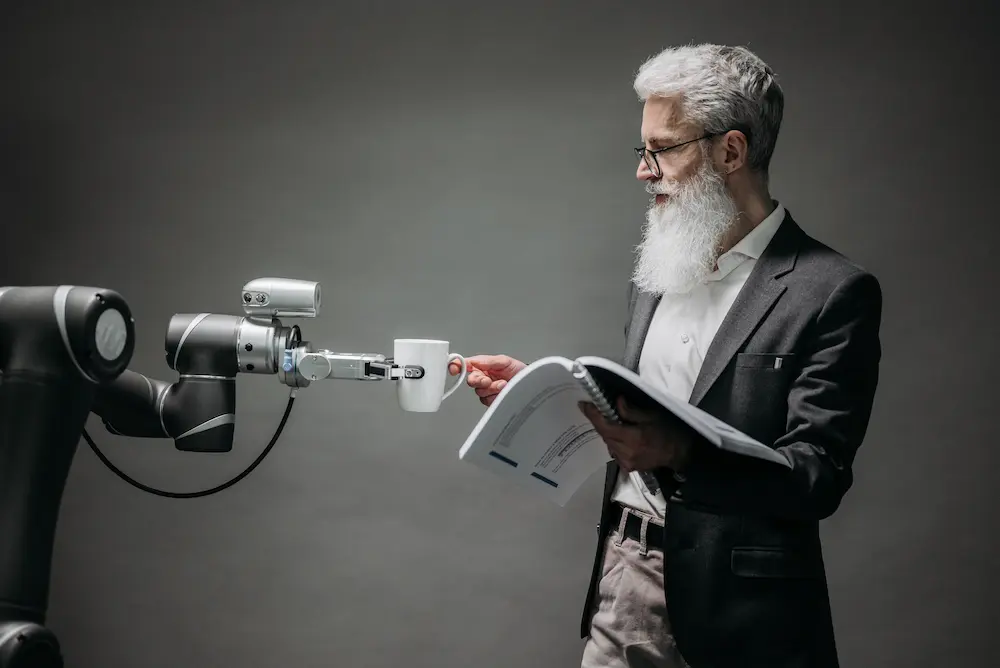
The future of AI is no longer a topic reserved for researchers or technology companies. Artificial intelligence is already influencing healthcare, education, finance, manufacturing, entertainment, and countless everyday activities. As these systems continue to improve, their impact will extend far beyond automation, changing how people solve problems and interact with digital tools.
Understanding where AI is heading helps individuals, businesses, and policymakers prepare for opportunities while addressing the challenges that accompany rapid technological progress.
From emerging technology to everyday necessity
Only a few years ago, artificial intelligence was considered an emerging innovation used mainly in laboratories or by large technology companies. Today, it has become part of everyday life, often without people even noticing it.
From voice assistants and recommendation systems to AI-powered search engines and virtual customer support, intelligent technologies are increasingly integrated into daily routines.
Some of the most common examples include:
- AI assistants that answer questions in natural language.
- Recommendation systems on streaming and shopping platforms.
- Fraud detection in online banking.
- Navigation apps that optimise routes using real-time data.
- Productivity tools capable of generating text, images, and code.
As adoption accelerates, the future of AI will depend not only on technological breakthroughs but also on how society chooses to implement and regulate these innovations responsibly.
How artificial intelligence is evolving faster than expected
One of the defining characteristics of today’s AI landscape is the extraordinary speed of innovation. Developments that previously required decades are now occurring within just a few years, thanks to improvements in computing infrastructure, cloud services, data availability, and increasingly sophisticated machine learning models.
Unlike previous technological revolutions, artificial intelligence improves through continuous learning. New models are trained on larger datasets, receive frequent updates, and become more capable of understanding language, recognising images, generating content, and solving complex problems.
Several factors are accelerating the future of AI:
| Driver | Impact on AI development |
|---|---|
| Greater computing power | Enables larger and more advanced AI models. |
| Massive data availability | Improves training quality and prediction accuracy. |
| Cloud computing | Makes AI accessible to businesses of all sizes. |
| Open-source innovation | Encourages faster research and global collaboration. |
| Increased business investment | Accelerates commercial AI adoption across industries. |
This rapid evolution means that organisations can no longer view artificial intelligence as a long-term project. Instead, AI has become a strategic capability that requires continuous adaptation.
Why the next decade will be different from the last
The past decade introduced artificial intelligence to consumers and businesses. The next decade is expected to focus on integration, autonomy, and widespread adoption across every sector of the global economy.
Rather than simply assisting with isolated tasks, future AI systems will increasingly collaborate with humans, make decisions based on complex information, and coordinate multiple processes simultaneously.
Several major shifts are likely to distinguish the future of AI from what we have experienced so far:
- AI systems will become multimodal, understanding text, images, audio, and video together.
- Personal AI assistants will manage increasingly complex workflows.
- Businesses will automate complete processes instead of individual tasks.
- AI will play a greater role in scientific research, engineering, and medical discovery.
- Governments will introduce more comprehensive regulations to ensure responsible development.
These changes will not happen overnight, but they indicate that artificial intelligence is moving beyond experimentation. The coming years will likely define how societies balance innovation, economic growth, and ethical responsibility while embracing the full potential of the future of AI.
What will define the future of AI over the next ten years
The future of AI will not be shaped by a single breakthrough but by the convergence of multiple technologies that are advancing simultaneously. Over the next decade, artificial intelligence is expected to become more capable of reasoning, understanding different types of information, making autonomous decisions, and working alongside humans in increasingly sophisticated ways.
While some changes will happen gradually, others may transform entire industries much faster than expected. Businesses that prepare early will likely gain a competitive advantage, while individuals who develop AI-related skills will be better positioned for an evolving job market.
Below are the key developments that experts believe will define the next generation of artificial intelligence.
More autonomous AI systems
Today’s AI tools mainly respond to user prompts or execute predefined tasks. The next generation of artificial intelligence is expected to move beyond reactive behaviour, becoming capable of planning, adapting, and completing complex objectives with minimal human intervention.
Instead of requiring constant supervision, autonomous AI systems will analyse situations, determine the best course of action, and adjust their behaviour as new information becomes available. This evolution could dramatically increase productivity across industries where repetitive decision-making consumes valuable time.
Examples of future autonomous capabilities include:
- Managing entire business workflows without manual intervention.
- Monitoring industrial equipment and scheduling maintenance automatically.
- Coordinating logistics and supply chains in real time.
- Supporting medical professionals by prioritising urgent patient cases.
- Acting as intelligent research assistants capable of analysing thousands of documents independently.
As the future of AI becomes increasingly autonomous, trust, transparency, and human oversight will remain essential to ensure these systems operate safely and responsibly.
Generative AI becoming part of daily work
Generative artificial intelligence has already changed how people create content, write code, design graphics, and analyse information. However, its role over the next decade is expected to expand far beyond individual productivity.
Rather than functioning as standalone tools, generative AI models will become integrated into business software, operating systems, communication platforms, and specialised industry applications. Employees across different professions may interact with AI assistants throughout the working day without switching between multiple platforms.
The transition can be summarised as follows:
| Today | Over the next decade |
|---|---|
| AI generates text or images on request. | AI collaborates continuously throughout complete workflows. |
| Users manually provide instructions. | AI anticipates needs based on context and previous interactions. |
| Separate AI applications. | AI embedded directly into business platforms and operating systems. |
| Limited personalisation. | Highly personalised AI assistants adapted to each user. |
For organisations, the future of AI will not simply involve adopting new software but redesigning processes so that humans and intelligent systems work together more efficiently.
AI agents capable of completing complex tasks
One of the most significant developments expected over the coming years is the emergence of AI agents. Unlike traditional chatbots, AI agents are designed to pursue goals rather than simply answer questions.
These systems can combine reasoning, planning, memory, and access to external tools to complete multi-step tasks independently. Instead of asking an assistant to perform one action at a time, users may simply define an objective while the AI determines how to achieve it.
For example, an AI agent could:
- Research a market opportunity.
- Compare competitor information.
- Prepare a detailed business report.
- Schedule meetings with relevant stakeholders.
- Continue refining the project as new information becomes available.
This represents a major shift because AI will increasingly function as a digital collaborator instead of a conversational assistant.
As the future of AI evolves, organisations will likely deploy specialised AI agents for finance, customer service, legal operations, software development, healthcare, and scientific research, allowing employees to focus on strategic decision-making rather than repetitive administrative work.
The rise of multimodal artificial intelligence
One of the biggest limitations of earlier AI systems was their ability to process only one type of information at a time. Modern models are beginning to overcome this restriction through multimodal learning.
Multimodal artificial intelligence combines text, images, audio, video, documents, and sensor data into a unified understanding of the world. Rather than analysing each format separately, these systems interpret multiple sources simultaneously, producing more accurate and context-aware responses.
This capability opens new possibilities across many sectors, including:
- Healthcare, where AI can analyse medical images alongside patient histories.
- Manufacturing, combining visual inspections with sensor readings.
- Education through interactive learning experiences using speech, images, and text.
- Customer service that understands written messages, voice conversations, and uploaded documents in a single interaction.
The future of AI will increasingly depend on this ability to process information much like humans do—integrating different forms of communication into coherent reasoning. As multimodal models continue to improve, they are expected to become the foundation for more capable virtual assistants, autonomous robots, and intelligent business systems.
You might be interested in: How to Style a Choker so you Don’t look Like every other girl on the planet

How AI will change the way people work
The future of AI is expected to reshape the workplace more profoundly than any previous wave of digital transformation. While automation has already simplified repetitive processes, the next generation of artificial intelligence will expand its role into decision-making, collaboration, creativity, and strategic planning.
Rather than replacing people outright, AI will increasingly complement human expertise by handling time-consuming tasks, providing real-time insights, and enabling professionals to focus on work that requires judgment, empathy, and innovation. As organisations adapt, success will depend on how effectively employees learn to collaborate with intelligent systems.
Jobs that will evolve rather than disappear
One of the biggest concerns surrounding artificial intelligence is whether it will eliminate millions of jobs. Although certain repetitive roles are likely to change significantly, most experts expect AI to transform occupations rather than replace entire professions.
Throughout history, technological innovation has consistently reshaped labour markets by automating routine work while creating new opportunities that require different skills. Artificial intelligence is expected to follow a similar pattern, although the transition may occur much faster.
Many professions will see specific tasks automated while keeping human expertise at the centre.
| Profession | How AI is likely to change the role |
|---|---|
| Doctors | AI assists with diagnosis and data analysis while physicians make clinical decisions. |
| Lawyers | AI speeds up legal research and document review, allowing lawyers to focus on strategy. |
| Marketing professionals | AI generates content and campaign insights while humans oversee branding and creativity. |
| Software developers | AI automates coding tasks but developers remain responsible for architecture and problem-solving. |
| Financial analysts | AI processes large datasets while analysts interpret market trends and business risks. |
The future of AI suggests that adaptability will become more valuable than performing repetitive tasks. Professionals who embrace AI as a productivity tool are likely to remain competitive as workplaces continue to evolve.
New careers created by artificial intelligence
As artificial intelligence becomes embedded across industries, entirely new career paths are emerging. Many of today’s fastest-growing roles did not exist a decade ago, and the coming years are expected to generate even greater demand for professionals capable of designing, managing, and governing AI systems.
These careers will extend far beyond software engineering. Businesses will increasingly require specialists who understand ethics, compliance, business strategy, cybersecurity, and human-computer interaction alongside technical expertise.
Some of the roles expected to grow include:
- AI engineers and machine learning specialists.
- Prompt engineers and conversational AI designers.
- AI ethics and governance consultants.
- AI cybersecurity specialists.
- Data scientists and AI analysts.
- Robotics engineers.
- AI product managers.
- Human-AI interaction designers.
In addition to these specialised positions, professionals in traditional industries will increasingly incorporate AI into their existing roles. This means that future career growth may depend less on working in technology and more on knowing how to leverage intelligent systems effectively.
As the future of AI unfolds, continuous learning is expected to become one of the most important career investments for workers across every sector.
Skills professionals will need in an AI-driven economy
Technical knowledge alone will not determine success in the future workplace. While understanding artificial intelligence will become increasingly valuable, employers are also expected to place greater emphasis on uniquely human capabilities that AI cannot easily replicate.
Professionals will need to combine digital literacy with critical thinking, creativity, communication, and ethical decision-making. The ability to collaborate with intelligent systems may become as fundamental as using computers or the internet is today.
Among the most valuable skills for the coming decade are:
- AI literacy and the ability to work with intelligent tools.
- Critical thinking and evidence-based decision-making.
- Creativity and innovative problem-solving.
- Emotional intelligence and interpersonal communication.
- Data interpretation and analytical reasoning.
- Adaptability in rapidly changing work environments.
- Cybersecurity awareness and responsible technology use.
The following comparison illustrates how workplace priorities are likely to evolve:
| Skills emphasised today | Skills gaining importance in the AI era |
|---|---|
| Manual data processing | AI-assisted data interpretation |
| Repetitive administrative work | Strategic thinking and decision-making |
| Basic software proficiency | AI collaboration and automation management |
| Fixed technical knowledge | Continuous learning and adaptability |
| Individual task execution | Human-AI teamwork and cross-functional collaboration |
Ultimately, the future of AI will reward professionals who view artificial intelligence as a collaborative partner rather than a replacement. Those who continually update their skills and embrace lifelong learning will be better prepared to thrive in an economy where intelligent technologies become an integral part of everyday work.
The biggest challenges facing the future of AI
While the opportunities are significant, the future of AI also presents complex challenges that governments, businesses, researchers, and society must address. As artificial intelligence becomes more autonomous and deeply integrated into critical systems, concerns surrounding privacy, fairness, security, and accountability become increasingly important.
Successfully adopting AI will depend not only on technological innovation but also on establishing clear governance frameworks that encourage responsible development. Organisations that balance innovation with ethical practices are likely to earn greater public trust while reducing long-term risks.
Privacy and data protection
Artificial intelligence relies on enormous volumes of data to learn, adapt, and improve its performance. This data may include personal information, financial records, medical histories, browsing behaviour, and business documents, making privacy one of the most pressing issues surrounding AI adoption.
As AI systems become more sophisticated, organisations must ensure that personal information is collected, processed, and stored responsibly. Failing to protect sensitive data can damage consumer confidence and expose businesses to legal and financial consequences.
Several factors influence privacy within the future of AI:
- The growing amount of personal data required to train AI models.
- Cross-border data transfers involving different legal frameworks.
- Increased use of AI in healthcare, finance, and government services.
- Greater consumer expectations regarding transparency and consent.
- Stronger international privacy regulations.
Businesses should increasingly adopt privacy-by-design principles, ensuring that data protection is incorporated into AI systems from the earliest stages of development rather than treated as an afterthought.
Ethical concerns and algorithmic bias
Artificial intelligence has the potential to improve decision-making, but it can also amplify existing inequalities if not developed responsibly. AI systems learn from historical data, and if that data contains biases or inaccuracies, the resulting models may unintentionally produce unfair outcomes.
Algorithmic bias has become a major concern in areas such as recruitment, lending, healthcare, criminal justice, and education, where AI-assisted decisions can directly affect people’s lives.
The following table illustrates some common ethical challenges:
| Ethical issue | Potential impact |
|---|---|
| Biased training data | Unfair or discriminatory decisions. |
| Lack of transparency | Users cannot understand how AI reaches conclusions. |
| Limited accountability | Difficulty identifying responsibility for AI decisions. |
| Deepfakes and synthetic media | Increased misinformation and fraud risks. |
| Excessive automation | Reduced human oversight in critical decisions. |
The future of AI will increasingly depend on developing systems that are explainable, transparent, and regularly audited to minimise unintended bias while maintaining public confidence.
AI regulation around the world
As artificial intelligence becomes more influential across industries, governments are introducing new regulatory frameworks designed to encourage innovation while protecting individuals and businesses from potential harm.
Different countries are taking different approaches. Some focus on promoting rapid technological development, while others prioritise consumer rights, transparency, and risk management. As a result, organisations operating internationally may need to comply with multiple regulatory standards simultaneously.
Several areas are expected to receive increasing regulatory attention:
- Transparency regarding AI-generated content.
- Risk assessments for high-impact AI systems.
- Protection of personal and sensitive information.
- Human oversight for critical decision-making.
- Intellectual property and copyright considerations.
- Accountability for AI-related harm.
The future of AI will likely involve closer collaboration between governments, technology companies, academic institutions, and international organisations to establish common principles that encourage innovation without compromising public safety.
Cybersecurity risks in intelligent systems
Artificial intelligence is becoming an essential tool for strengthening cybersecurity, but it also introduces new vulnerabilities that cybercriminals may attempt to exploit. As AI systems become more connected to business operations, protecting them from manipulation will become increasingly important.
Attackers may target AI models by attempting to steal proprietary data, manipulate training datasets, generate convincing phishing campaigns, or exploit weaknesses in automated decision-making systems.
Some of the most significant cybersecurity challenges include:
- Data poisoning during AI model training.
- Adversarial attacks designed to deceive AI systems.
- AI-generated phishing emails and social engineering.
- Theft of proprietary machine learning models.
- Automated cyberattacks that operate at unprecedented speed.
At the same time, artificial intelligence is also improving cyber defence by identifying unusual behaviour, detecting threats in real time, and automating incident response.
The evolution of the future of AI will therefore create a continuous race between increasingly sophisticated defensive technologies and increasingly advanced cyber threats. Organisations that invest in AI governance, cybersecurity infrastructure, and ongoing monitoring will be better equipped to protect both their systems and their users in this rapidly changing environment.
You might be interested in: How to Style a Choker so you Don’t look Like every other girl on the planet
Common myths about the future of AI
The rapid growth of artificial intelligence has generated excitement, but it has also fuelled numerous misconceptions. Headlines, science fiction, and social media often exaggerate AI’s capabilities, leading to unrealistic expectations or unnecessary fears.
Understanding what artificial intelligence can and cannot do is essential for making informed decisions. Separating facts from myths helps businesses adopt AI responsibly while allowing individuals to prepare for the real changes ahead rather than imagined scenarios.
The future of AI will likely be shaped by gradual technological progress, human oversight, and regulatory frameworks rather than dramatic overnight transformations.
Will AI replace all human jobs?
One of the most widespread myths is that artificial intelligence will eliminate nearly every profession, leaving little room for human workers. While AI is expected to automate certain tasks, most experts believe that complete job replacement will be far less common than job transformation.
Many occupations consist of multiple responsibilities, some of which can be automated while others rely on creativity, emotional intelligence, negotiation, ethical judgment, or interpersonal communication. These human qualities remain difficult for AI to replicate.
The distinction can be summarised as follows:
| Common misconception | More likely reality |
|---|---|
| AI will replace every worker. | AI will automate specific tasks within many jobs. |
| Human expertise will become unnecessary. | Human supervision and decision-making will remain essential. |
| Entire professions will disappear overnight. | Most roles will gradually evolve as AI capabilities improve. |
| Only technology workers will benefit from AI. | Professionals across every industry will increasingly use AI tools. |
The future of AI is therefore more likely to create collaboration between humans and intelligent systems than widespread replacement of the global workforce.
Will artificial intelligence become conscious?
Another common belief is that artificial intelligence will eventually develop consciousness, emotions, or self-awareness similar to humans. Although this idea is frequently explored in films and novels, there is currently no scientific evidence suggesting that existing AI systems possess consciousness.
Modern AI models identify patterns, process information, and generate responses based on statistical relationships learned from data. They can simulate natural conversations remarkably well, but they do not experience emotions, intentions, desires, or independent thought.
It is helpful to distinguish between current capabilities and fictional assumptions:
- AI can generate human-like language.
- AI can recognise images, speech, and patterns.
- AI can solve complex computational problems.
- AI cannot experience emotions or consciousness.
- AI does not possess personal beliefs, motivations, or awareness.
As research continues, discussions about artificial general intelligence (AGI) remain active within the scientific community. However, the future of AI should not be confused with speculative portrayals of self-aware machines, as today’s systems operate fundamentally differently from the human mind.
Is AI only for large technology companies?
Many people assume that artificial intelligence is accessible only to multinational corporations with enormous budgets and specialised research teams. While this may have been true during the early stages of AI development, the landscape has changed considerably.
Cloud computing, open-source models, and subscription-based AI platforms have made advanced technologies available to businesses of all sizes. Small companies can now integrate AI into customer support, marketing, finance, logistics, and data analysis without building their own machine learning infrastructure.
Today, organisations can adopt AI through a wide range of affordable solutions, including:
- Virtual customer service assistants.
- Marketing automation platforms.
- AI-powered data analytics tools.
- Document summarisation and content generation software.
- Predictive maintenance systems for industrial operations.
- Intelligent cybersecurity monitoring platforms.
The democratisation of these technologies means that the future of AI will not be limited to Silicon Valley or global technology firms. Instead, businesses across every sector (including healthcare, manufacturing, retail, education, and professional services) will increasingly have access to AI solutions tailored to their specific needs and budgets.